Pages


Sunday, February 21, 2010

SPRING BREAK - SECOND POST

SCENERY ON THE WAY TO GLEN COE


HOLLY ON THE MARSH AT GLEN COE (NO WOLVES IN SIGHT)


GLEN COE


BEAUTIFUL SCENERY ENROUTE

This is the second post of the trip to Scotland that Holly and I took. In a couple of days, I will post the last post of this blog. Hope you enjoy it.

The next morning, we left our B & B in the pouring rain. Happily, the weather cleared as we drove, and we entered the Highlands which boasted beautiful vistas, including sparkling white snow-capped mountains.

When we arrived in Glen Coe, we stopped at the Visitor's Center, ate lunch and visited the tiny museum. We were directed to a hiking trail near a ski center, where we walked 4 - 5 miles across a bog. The trail was an immensely rocky path which forced us to watch each step.

The hilly land rolled around the base of the snow-capped mountains. Just below winter-browned peat moss, cold water pooled and puddled, as Holly discovered when she stepped from the path and sank into the wet ground. Beside the path, a stream flowed with icy water -- snow-melt -- on this sunny, warm afternoon. As we walked higher, icicles began to adorn the sides of the stream, and, as we hiked higher, snow began to appear in patches.

We were the last hikers to leave and Holly grew concerned about being caught on the marsh in the dark, and being attacked by wolves (which have not existed in Scotland for 300 years), so we hurried along the rugged trail. In my haste, I stepped wrong, tripped and fell. Once I realized I was going to fall, I aimed myself at a patch of moss, which cushioned my fall, though it left me with wet hands and knees.

Later, as we left the B & B to go to dinner in the village, a herd of deer spotted Holly and darted over a stream and into a pasture near her. We did not see so much as a hare on our hike "nearly guaranteed to see game" but had a group of deer come right to our door! We recognized a large male, a young male, a mom and fawn, and a couple of other does. The little group stood still, with the large stag nervously keeping watch, until they realized we had nothing to feed them, then they faded silently into the dusk.

The next morning the snow caps had increased overnight, but rain poured on the B & B. The birds trilled as happily as on a warm, sunny morning. On the entire trip, we enjoyed the spring celebration of the many birds in Scotland. Rain, snow, or sun, they sang their little hearts out.

Holly tasted haggis at the Glen Coe B & B. It smelled like sausage, and Holly liked it, but could not persuade me to try any. Usually I am the adventurous one, but having read about haggis being "sheep's stomach," I just did not want to try it. Maybe next time. (Probably not).

As we neared Urquhart Castle, the rain gradually stopped. The wind blew, but we were not too cold. I began to believe that we had a Weather Angel (as well as a Driving Angel) helping us throughout the trip.

We explored the castle ruins and its grounds. Once again, I was puffing at the top of each climb. (Note to self: really, truly begin workouts . . . no, seriously!)

The castle lies north of one of the Great Glen's alcoves, jutting into the deep waters of Loch Ness. I excitedly scanned the famous loch, but no Nessie. Although a stronghold for over 1000 years, the castle ruins dated from well after the Dark Ages. But the earlier fort slept undisturbed beneath the walls. Holly wished all the other tourists away so she could envision the area as it was in 600-700 A.D.

However, later we pulled on our boots and walked through the forest near our B & B. This forest is old (representative of the one that existed in the late Iron Age). We tried to walk to Loch Ness, but the bridge was out and the Coiltie River too deep to wade. However, we enjoyed the trees, shrubs, and wild flowers which were just beginning to bloom. Here, at last, Holly could look around and imagine her characters living in a Dark Ages world.

The forest was quiet, only the susurration of the river and symphony of the birdsong disturbed the silence. As we wound our quiet way through the woods, Holly flushed a female mallard, which suddenly whirred up, followed by her mate. Holly squeaked and stumbled back, startled out of her wits. Her loving mother guffawed loudly. Later, a quail frantically flapped its way into the sky as Holly approached, causing another shriek. Then, at dinner on our last night in the Highlands, our booth was decorated with pictures of mallards and quails. It seems Holly couldn't escape her tormentors.

Our trip to Inverness (inver means river mouth in Gaelic, therefore Inverness is mouth of the Ness River) to find Craigphadrig Rock was much more pleasant than preceding trips. We rode on nice, wide-laned "carriageways", some of them "dual carriageways," like our expressways and interstate highways. Finally, I could relax and enjoy the scenery as I drove. From the white-capped mountain down to the rolling hills, spring was creeping up on Scotland. Daffodils bloomed on the lower slopes, while the yellow flowers of broom and heath brightened the roadsides. The dark green of the evergreens mixed with the hardwoods whose tender green leaves appear incandescent on cloudy days - seeming to glow from within.

We observed few cattle, but thousands of sheep and, since it was almost April, several tiny white lambs (some with black faces) trying out their new legs at their mothers' sides.

Friday, February 19, 2010

WHAT I DID ON MY SPRING BREAK

DUNADD FORT AREA, The First Site We Explored


GARDEN GNOMES

This is the story of a trip to Scotland that I took with Holly (my daughter) a couple of years ago. Because of its length, I will post it in three parts. Hope you enjoy it.


Spring Break at 60 is a little different from Spring Break at18. No wild parties for me and my 23-year-old daughter, Holly. No sun burns (although Holly did manage a sprinkle of freckles across her nose). No bikinis or hot, sandy beaches. Instead we flew to cool, rainy Scotland to complete research for a novel Holly is writing.

Undaunted by the thought of the long trans-Atlantic flight in Steerage, I mean, Economy, I also felt pretty comfortable with spending every night in a different B & B (Bed and Breakfast). But I dreaded traveling from one historical site to another, once I learned that we could not travel by train, cab, or bus. I would have to drive. In Scotland, where they drive on the wrong side of the street. Where the roads are sometimes narrow as the eye of a needle. And then people park their cars there. On both sides. Then you meet traffic!

We rented a clean little VW Golf diesel with an automatic transmission. We also rented a "NeverLost" GPS system, which worked well most of the time. Like computer driving maps, sometimes the GPS gave incorrect directions and Holly, our navigator, looked at the electronic map and argued with the "lady" who voiced the directions.

"No! That's not right. We need to turn LEFT, NOT right at that intersection!" Holly shouted at the machine.

"Are you sure?" I cried frantically in a high-pitched voice. "Quick, we're at the intersection, which way, which way?"

A couple of people blew their horns when I abruptly turned left from the right-hand lane, but I think Edinburgh drivers are just naturally rude.

Holly sometimes screamed at the GPS and called the "lady" names, but the "lady," with a cool, refined British accent remained calm, even when we took the 2nd exit in the "roundabout" instead of the 3rd. After an error, a silence ensued and then the voice intoned, "Calculating your route" and tried to get us back on track. It did seem, however (and it might have been our imagination) that, as days passed and mistakes piled up, the silence became chillier and "Calculating your route" was preceded by a just-audible sigh.

But I digress.

After a hair-raising drive from Edinburgh to Dumbarton (I kept scrubbing the "tyres" against the "kerb," trying to avoid big trucks edging into my miniscule lane), we arrived safely at our B & B. From there we walked from our B & B to Dumbarton Castle, which is on Dumbarton Rock.

Dumbarton Rock, the core of an extinct volcano, stands where the River Leven joins the River Clyde. Its recorded history goes back about 1500 years, making it the oldest recorded stronghold in Scotland. We climbed both crests of the Rock: the White Tower Crag at 240 feet above sea level, and the slightly lower Beak.

I toiled up the 557 steps of the Tower, then staggered up the rest of the grassy path to the top of the hill. I admit that I had to stop and rest once or twice. I pretended to be enthralled with the magnificent view, not wanting Holly to hear my gasping or see my heart jump right out of my chest.

The view from the peaks proved worthy of the arduous climb. This ancient volcanic cone thrusts up in splendid isolation, soaring above the low-lying lands along the two rivers as they conjoin, forming the broad Firth of Clyde. What a perfect location for forts and, later, castles! On a peninsula, almost surrounded by water, with the only land approach blocked by precipitous basalt slopes, the peaks must have been nearly impervious to attacks

On top the wind gusted and whirled around Holly, blowing her long chestnut hair across her face and whipping it away again, while she gazed and dreamed, imagining the wooden fort and village which existed in the Dark Ages.

On Wednesday, the route to Argyle followed a winding, hilly highway -- very narrow, but with beautiful scenery. As we traveled, vistas changed with the quality of light. Mists and clouds thickening and thinning hid and exposed hills and changed our perception of the scene. Long peninsulas thrust far into the sea and fjords drove deeply into mountains while waterfalls gushed from the heights and rivers danced and sparkled.

When we arrived, we put on our rain boots and wore our raincoats over padded vests. Holly also had a jacket under her raincoat to ward off the cold. Rain drizzled, but let up as we set out into the courntryside.

We found Dunadd Fort - a hill with a little rock-work left from 1000 years or so ago. Dunadd was the royal center of Dal Riata, the kingdom of the Scots. We slogged up the hill which was steep and slippery - almost continual rain keeps the area green, but muddy. Both of us were buffeted by the wind and my umbrella blew inside-out, so I closed it and faced the "Scottish Mist" (drizzle and fog) unprotected.

What a wild, Scottish view, with lowering gray skies, rain, wind, and fog. Once again, it is clear why the forts were always a hard climb - we could see for miles. On clear days, early warning of approaching enemies was assured. Tree-lined streams cut through acres of pastures. Sheep grazed peacefully against a backdrop of hills and ridges. The rugged tor towered over the plain. Huge stones alternated with tough grass on the sides of the hill.

Holly photographed the "Foot," a footprint cut into the rock where in olden days the new king placed his foot during his coronation vows. To the kings of Dal Riata, this footprint was a symbol of the king's marriage to the land, his dominion and dependence on the land for the support and nurture of his people. We also found the "Cup" a basin carved into the rock, possibly used for libations (drink offerings to gods).

Surprised when I saw the pictures that Holly had taken at this site, I wondered, "Who is the TROLL in the long raincoat, red gloves, and pink boots? Could that be me? I look like I should be under a bridge, demanding "Who is tripping across my bridge?" of Billy Goat Gruff! Or, really, I look more like a garden gnome, with a tiny head atop a gradually widening body covered by an ankle-length raincoat supported by the little pink boots.

Saturday, February 13, 2010

GATOR WRANGLER

I may have mentioned that I work part-time at a nature center. I refer to myself as "The Saturday Person" at work. I answer phones, attend visitors, clean the bat cage, top off water for thirsty varmints, clean up after birthday parties, etc. I also get to help feed and care for orphaned wildlife, such as bunnies, birds, ducks, possums, whatever small animals that the staff is caring for. I enjoy working with the creatures most of all.

Recently I was allowed to remove our alligator "Flounder" from his habitat and put him into a tub to dry off before a party. The children are allowed to touch Flounder during the party as he is held behind his head and at the base of his tail. They feel the hard bones of his back (osteoderms), his smooth white tummy, and his clawed feet.

The only thing that Flounder seems to dislike is the capturing. Once he is being handled, he doesn't resist or struggle. But he does try to avoid that initial grab. I have only removed Flounder twice in my career. The first time, he just ran forward a little, then wriggled when I lifted him out. At 3 feet long he's pretty strong and getting stronger as he grows. Still, he gave me no trouble that first time.

So, I was pleased to be asked to get him out in time to dry off for the upcoming birthday party. I removed the glass end of his enclosure and he promptly darted to the back of his enclosure. When I stepped up into the habitat, Flounder dove into the water, swam under a log, settled to the bottom and closed his eyes. I could almost hear him sigh as he apparently drifted off to sleep.

I gave him a few minutes to grow bored under water (and besides don't gators have to breathe sometime?), but he remained steadfast in his hidey-hole, daring me to plunge my tender, delicate, possibly trembling hands into a couple of feet of his watery domain.

Well, I couldn't do it. So I knelt at the back of the pool and just tweaked his tail. Just as I expected, he sprang from the pool onto the side of the habitat. What I did not expect was when he discovered no glass partition there, he sprang out and against the window. I hurriedly clambered from the habitat, my sneaker catching on the Astroturf, stumbled to the window and nabbed the Houdini-esque reptile.

He didn't even put up a fight. Probably he had seen the window as a route to escape those dratted birthday parties. I thought I heard him mutter, "I can't take one more party, with sticky little fingers touching me!"

Embarrassed by the near-escape, I gingerly put the little gator into his tub and closed the lid.

I visited Flounder after the party. He looked calm, sunning himself under the heat lamps. But his green basilisk-like eyes seemed a little colder as he regarded me. And that smile of his looked pretty smug.

Friday, February 5, 2010

SQUEAKY

I decided to post the following story here, because it follows the story just before it. Three years after my brother Gary died, his wife, Faye, passed away. This is how the tale was published:


Last October, I inherited a 12-year-old, fearful dog named Squeaky. The death of my widowed sister-in-law, Faye, left Squeaky an “orphan.” Just prior to her surgery, Faye had said, “If anything happens, will you take care of Squeaky for me?” Of course, I said yes.

I dreaded taking on a fourth dog and no one in my family wanted to have Squeaky, a known biter and a dog who hated everyone except Faye. She had never once let me pet her. Squeaky tended to bite from behind. While my brother Gary was ill, Squeaky would hide while the hospice nurses visited, then chase them to the door, barking and snapping. More than once, I had been forced to jump between Squeaky and her terrified quarry. At my sharp “No, ma’am!” she would veer off and go hide behind a sofa.

Friends urged me to have Squeaky put down. But, although she was 12 years old and hard to handle, I just couldn’t put down a relatively healthy little dog, who might have several years of good living ahead of her. Then, too, this was the one thing I could actually do for Faye. I knew it meant more to her than anything.

When I got Squeaky, she hadn’t been touched by a human hand for about a month. A friend of Faye’s had lived in her house and kept Squeaky fed, but she hid when he came in and never let him touch her. Her veterinarian was actually afraid for me to take her, so he gave me a strong sedative (not for me, for Squeaky). I slipped it into her food and sort of “herded” the subdued dog into the crate for the trip to my house.

Fortunately, I had access to a wonderful dog trainer. She met me at my house as I arrived with a drunken Squeaky. I felt I needed help introducing Squeaky into the household. I have Silvie, a 5-pound poodle; Michelle, an 11-pound poodle; and Gizmo, a 13-pound Shih Tzu. I was truly afraid that Squeaky might injure Silvie and knew that she would bully Gizmo, and tangle viciously with Michelle (Queen of the World).

My husband, teenaged daughter and son, and I were afraid to walk past Squeaky, since she always attacked from behind. We did a little dance with Squeaky – the “please don’t bite me cha cha” -- approach, turn as you pass and back away.

For two weeks, poor Squeaky grieved by walking incessantly. She walked around the house, upstairs and down, only stopping to nap in her crate. Old and fat, weighing 19 pounds instead of the recommended 9 -10, she would stop on the stairs to pant for a while, before trudging up to the top. I suppose she was looking for Faye and home. It was sad.

If one of the family looked at Squeaky when she entered a room, she made a quick U-turn and disappeared. If we spoke to her, she ran. Of course, she wouldn’t come to me when I called her, and no way would she come past me to go outside for elimination. She apparently waited as long as she could and then “went” as she walked, like a horse. The only way I could get her outside was to lure her into her crate with food and then shove it to the open door. From there, if she left the crate, she was outside. After she eliminated, I would praise her and let her in. She would scurry past me and begin her pacing again. I wondered whether she was senile.

The trainer suggested that I feed Squeaky all of her food, even canned dog food, from my hand. When I knelt and softly called Squeaky, holding out my hand and carefully not looking at her, she would creep cautiously near me. Then she would bob back and forth with fear and indecision and finally nuzzle my hand. We did not know whether she would snap at my fingers, but she was gentle while taking the food. She began to trust me more and more. I am happy to report that she ADORES me now. Food was definitely the key to Squeaky’s heart.

Gradually she let me touch her. A little rub under the chin was acceptable. Later, a gentle pat on the head. However, she had forbidden spots which, if touched, elicited a snap. The spots moved around, apparently according to her mood. Yesterday, “don’t touch the ears!”, today, “okay, rub the ears, but don’t touch the tail,” tomorrow, who knows?

She has bitten me hard only once. Who would think a 12-year-old dog could bite so quickly (like a snake striking!), and so hard that she not only punctured my thumb, she also left a white mark on my thumbnail, as if I had hit it with a hammer! But I have learned the signs and observe them carefully when I bathe her or trim her hair. First, she looks away from me. Then she makes her little eyes bug out. After that, she might growl or just lift her lips in a warning snarl. I have to give up my pride and put a muzzle on her if she gets to the growl or snarl. Surprisingly, she will stand calmly and let me fasten the muzzle on her. And when I remove it, she apparently harbors no hard feelings.

We have trained Squeaky not to chase our company and bite them. Friends and strangers alike are asked to help train her by whirling around, pointing a finger, and shouting “NO!” when she attacks. Being fearful, Squeaky skids to a halt and runs away. Since chasing people is not fun anymore, she has stopped - mostly.

I credit the trainer and my vet for good advice on handling Squeaky. Her weight is down to 11 pounds and she is pretty healthy and happy. She shadows my every step and keeps her eyes on me. When I look her way, she “smiles”, a most loving and pleased expression, accompanied by ears that fold back and a wagging tail. She does wrangle with the other dogs, but things are working out for her. I have come to love her and enjoy her antics and she enjoys a household with dogs, a bird, teens, and parents – lots going on all the time.

Squeaky is curled up at my feet as I write this, relaxed and at home. I think Faye would be pleased.

(Squeaky died about a year after she came to live with us. She was 13 years old.)

Friday, January 29, 2010

ANGELS UNAWARE

Let brotherly love continue.
Be not forgetful to entertain strangers; for thereby some have entertained angels unawares. Hebrews 13: 1 and 2


A few years ago my brother, Gary, died after a fairly short struggle with cancer. But my story starts several years before the onset of his illness.

About three years before Gary got sick, one of Gary's friends asked permission for his cousin to park his truck in Gary's driveway at night. "Jim's* ex-wife and daughter are living in his house," Billy* said, "so Jim doesn't have a place to stay." Jim was fighting alcohol addiction. It cost him his wife, child, home, and job. Eventually it also cost him his truck, which was repossessed.

Gary and his wife, Faye, then allowed Jim to clean out a shed in their back yard and move his possessions into it. They ran a long extension cord from their house out to the shed, so Jim had a working electric blanket and lamp. This was Jim's home. Although Atlanta enjoys mild weather most of the time, winter has quite a bite. We sometimes get snow and ice, freezing temperatures and occasional drops below zero degrees (F). Somehow Jim survived the winter in his shed, working when he could find employment and a ride to work.

After my brother told me of Jim's new home, I worried a bit about my sister-in-law, a pretty woman with blue eyes and waist-length blond hair. "Are you comfortable with that man living in the back yard?" I asked her. "You're not afraid of him, are you?"

"Oh, no," Faye answered. "He's as nice as can be."

And he was. Before long I was hearing about the tall, thin, dark-haired man carrying the heavy garbage cans to the curb for Gary and Faye. He began to mow their grass. A carpenter and handyman, he repaired anything around the house that didn't require much money, since none of them had very much. For her part, Faye always brought dinner for Jim on the nights she picked up hamburgers on the way home from work. When she cooked, she invited Jim to partake. Eventually, he was allowed to help himself to food in the kitchen. When he could, he gave Faye money toward the grocery bill and occasionally grilled food in the backyard for the three of them and any other friends who were there.

Billy, Jim's cousin, was also handy, and always willing to help repair things in the worn old house. He fixed plumbing, helped install a water heater, and used his car to take Gary and Jim around town.

Gary's contribution to these two men was emotional support. He was older and listened to their problems, helping when he could. Billy also suffered through a divorce during this period and poured out his frustration and the grief of missing his two young children to Gary.

My brother was always easy to talk to. Somehow he never seemed judgmental or shocked. When arthritis made his back so painful that he could no longer work as a motorcycle mechanic, he studied (of all things!) cosmetology. While he worked as a barber and hairdresser, I guess he did "hear it all." Somehow, people just opened up to him. I am sure he was a steadying and sympathetic listener to his friends. And, as they became more aware that Gary's health was deteriorating, his friends responded to his need.

Gary, who suffered from severe back pain despite earlier spinal surgery, called me one day. "I am feeling dizzy," he said. "I fell yesterday."

"Have you seen your doctor?" I asked.

"Yes. She said I have an inner ear infection," he told me. "And she gave me some more anti-inflammatory medicine for the pain in my neck and back."

As days passed, Gary became weaker and more unsteady on his feet. Jim checked in on Gary whenever he was not working, cooking for him and helping Gary walk around the house. Jim could easily lift Gary because Gary was a small man. Even before he became seriously ill, Gary, who was 5' 9", weighed only 125 pounds but he became emaciated due to food allergies and pain and had trouble maintaining even 100 pounds.

Faye was able to work during Gary's illness, because Jim was mostly unemployed. He sat with Gary, eventually having to carry him to the bathroom or his chair in the living room. When I called one Friday, Jim said that Gary wouldn't eat or even drink anything. "I fixed him some soup," Jim said sadly, "but he won't wake up enough to eat it."

Thoroughly frightened, I called Gary's doctor, who told us to take him to the emergency room. Jim and Billy carried him to Billy's car and drove him to the hospital. They stayed with him until Faye arrived. The news was bad -- Gary had cancer in his lungs, brain, liver, and bones. There was no hope of recovery; however, radiation on his head cleared Gary's mind.

He also tried chemotherapy, but to no avail. The chemo changed Gary's appearance. Gone were his brown hair, black eye lashes and eye brows, and grizzled beard. "You're all eyes and ears," Faye told him. It was true. His large, round, dark brown eyes and small but prominent ears seemed to be all that was left of Gary.

Once he was home from the hospital, Jim stayed with Gary every day while Faye worked. Eventually her company moved a computer into their home, so she could work at home and be with Gary. Then, Jim and Billy visited continually, sometimes several short visits each day. Jim, being young and strong, was helpful in Gary's care as he inevitably declined. These good friends even cleaned Gary and changed him when he could no longer care for himself.

Although there were several others who helped Gary and stayed close through his illness, I would like to mention one more -- John. Gary and John had been friends since Gary was 14 and John was nine years old. The cute little boy grew up tall and handsome -- and addicted to drugs. Both men had trying times and made mistakes -- grievous ones. Through the almost 40 years of their friendship, they helped support each other. During Gary's last illness, John stood by him. He visited often at the hospital before Gary went home to die. During the five months after that, John spent many evenings sitting with Gary, watching motorcycle races and boxing matches on TV and giving Faye help in Gary's care. He sat up with us all night when Gary lapsed into a coma. He read a prayer and spoke touchingly at Gary's memorial service.

I thank God for these three friends of Gary's. What would we have done without them? In the comic strip "Snuffy Smith" Loweezy often said, "You're gooder than airy angel!" Jim, Billy, and John were also gooder than airy angel. And who were they? Just three men down on their luck. Not people one would usually hold up as an example -- jobless, homeless, penniless at times. But not heartless -- no, they were big in heart, full of love, courageous to the end.

To Gary they were brothers. They "Let brotherly love continue," as exhorted in the verse quoted above. And Gary and Faye were blessed when they "entertained strangers" who returned their kindness as if they had indeed "entertained angels unawares."

I thank my God upon every remembrance of you.
Philippians 1: 3


*Names have been changed.

Sunday, January 24, 2010

A FEW DAYS IN THE LIFE OF A MOVIE EXTRA

I worked a four-day stint as an extra in the film “We Are Marshall”. The movie depicts the Marshall University football team which suffered a disastrous plane crash in 1970 as it returned to West Virginia after a game. The entire team, most of its coaches, some parents and supporters, as well as the crew, perished. The film shows the comeback of the team and the revival of the spirit of the college.

My daughter, Holly, and I saw an article in the “Peach Buzz” column in "The Atlanta Journal and Constitution." We signed up and were called to report to Jonesboro for the shoot. About a week before the shoot, we drove to “Wardrobe” in Decatur to be fitted with our 1970 ensembles.

Holly’s outfit was cute; a wrap-around A-line denim skirt and plaid long-sleeved shirt. She was 21 and slender and looeds good in anything. I, however, am ……not 21 and cannot claim to be slender any more. It is Holly’s fault that I am not svelt, even though most people think a woman should have recovered her pre-baby figure in fewer than 21 years.

I was “fitted” with a stretchy, tight three piece suit -- a straight skirt, sleeveless shell, and long-sleeved jacket. The jacket covered a multitude of sins (the gluttonous kind), which is why the pretty, thin young Wardrobe lady brought it to me. When I continuously lamented my middle-aged middle, she kindly said, “everyone has issues with their body”. But when I examined myself in the Wardrobe mirrors, I wondered, “Does everyone look like a walking link sausage?”

The information sheet told us to arrive at the set with our hair in curlers and our make-up applied. I had not rolled my hair in 30 years, so I bought some pink sponge curlers. The trip from Carrollton to Jonesboro took a little over an hour to drive. I stared straight ahead, afraid to make eye contact with any other drivers or passengers, embarrassed by the pink curlers in my hair. Only when we arrived in the large parking lot and most of the other women wore curlers, too, did I feel comfortable. The security people waved us in, knowing that we belonged there by our space creature appearance.

I had been told that working as an extra involved a lot of waiting. Now that I have experience in the field, I can tell you it involves a lot of waiting. A lot. Waiting in the heat and long lines to check in. Waiting to get your costume from Wardrobe. Waiting in Make-up lines. Waiting in Hair Dressing lines. Then waiting in Extras Holding, which was an un-air conditioned gym, crammed with hot, sweating people.

Each day I wiggled into my sausage casing, er 100% wool suit, and had my hair teased and sprayed and came out looking quite matronly. The first day my “do” made me resemble Edith Bunker. The second, I looked like Dear Abby – the photo of her that for years graced the head of her column, featuring the coif with WINGS. The last two days, I didn’t resemble anyone, but had big hair, which my daughter tried to press down a little. Holly does not like big hair. Hers is long and sleek and would not hold any curl, so she didn’t have to roll hers after the first day.

For our actual work, we filled a football stadium and were fans. Sometimes I was a Marshall fan and sometimes I was a Morehead (Ky.) fan. We sat on the aluminum seats of the concrete stadium and jumped up and cheered or, alternately, drooped in disappointment as our team of the moment succeeded or failed to score.

The stadium was also filled with dummies – not us but balloon people. Propped up on their bottoms, which is where their bodies ended, and dressed in a variety of costumes, they occasionally listed drunkenly or fell onto their faces. Many were truly scary, some were just ugly. Some actually looked like people we recognize. For instance, several looked just like John Travolta.

All during the shooting, we and the dummies were moved singly and en masse to different seats and across the field to the other side of the stadium. Our work lasted from around 4 p.m. until the next morning, 4 a.m., 5, a.m., 6 a.m., even 7 a.m. “Lunch” took an hour, and two nights we had to stay inside until a storm blew over. We did film in misting rain, but prudently stayed inside during lightening and a nearby small tornado. By our release time each morning, we appeared to be extras in a zombie movie -- red eyed, shuffling, and dazed.

Matthew McConaughey starred as the coach trying to help Marshall develop a winning football team. On the set daily, he made many female hearts to go pitty-pat. When the media reported McConaugheye’s break up with his girl friend, every delirious fan there felt sure that he would notice her and be stricken with love at first sight. As he walked through the stadium of smiling women, some of the swooning could be blamed on McConaughey, instead of the unbearable heat and humidity.

We filmed each scene DOZENS of times, and from MANY angles. At first it was exciting to see the football plays. I half forgot that the plays were choreographed and felt a little thrill at a well-executed pass. Eventually that began to pall, but by the last night, when a difficult pass, tip, and interception play took FOREVER to perfect, when the players finally succeeded, the crowds erupted -- screaming, jumping, waving their pompons. Even the people who should have been devastated forgot who they were cheering for in the excitement of being released to go home at a mere 4:00 a.m.

Many Marshall graduates and family members of the passengers of the downed plane worked as extras in the filming in Atlanta. They seemed pleased to tell us of their connection to the school and as one man said, “I had to be a part of this.”

The people we met added a great deal to the enjoyment of the experience. The young people who took care of the extras, i.e. herded us around and told us what to do, were friendly and kind. I especially appreciated their consideration of a woman of 74 years who, bless her heart, worked every single day, existing on four hours of sleep daily while taking care of her disabled sons. Meanwhile, I literally fell into my bed each morning, half-undressed, only to rise at the last minute to shower, dress, and run out the door, calling my good-byes to my family.

I was amazed that my new friend could continue to work, although by the last couple of nights, several of us noticed that, as she conversed with us in the stands, her eyes would occasionally roll up into her head. I also saw her drooping in her seat, eyes closed, and I tensed, ready to catch her if she toppled forward. But on cue, she continually sprang to her feet, cheering her team.

Being an extra is good, if exhausting, work. I had planned to read a lot during the waiting periods, but found that I enjoyed talking with my cohorts. Everyone has an interesting story, if you take the time to listen.

Friday, January 22, 2010

THE LEAST OF THESE

THE LEAST OF THESE

IN LEBANON

This is the last segment of the last three posts, which are below. I hope you have enjoyed it.

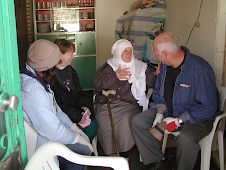
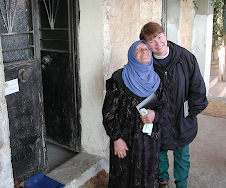
How do I reconcile the people we meet with radicals who hate us and terrorists who want to kill us? Before I came here, I thought the Hezbollah was a secret, criminal group. Here in Lebanon there is no secrecy about being Hezbollah. As days pass and we become more comfortable with each other, our escorts (even the Hajj) pose with us for photographs. The young men become friendly and playful. One proudly shows us his baby daughter, a dark-eyed, smiling beauty. And in this village, the Hezbollah is respected and loved -- the only group, as the villagers see it, which defended them during the attack on their home. “They are like America’s Minute Men,” remarks one of our team.

The genial young men keep a close watch over us, though. They NEVER leave any of us alone. In another village, the entire group, except for me, walks up a street and around a corner while I pay for my purchases. When I leave the shop, my escort drives the van slowly along beside me as I walk through the quiet village. I walk as quickly as I can, embarrassed and feeling like the First Lady of America being shadowed by the Secret Service. Still, the deserted street is a little scary and I appreciate the company.

I hear one of our translators replying to questions from one of our team, “America should help the weak nation against the strong one,” she states. “Israel is so strong and Lebanon so weak.” Asked about the flyers dropped by Israel warning the residents to leave the area before the attack started, she replies, “If you were told to leave your home and land and let someone else take it over, would you?”

We observe and ask questions, but we do not involve ourselves in politics. We can see the problems of the Lebanese people more from their point of view now, and commiserate with them in their suffering. Our mission is to demonstrate the gospel of Christ by helping others. We are here as Baptists, to succor the cold, hungry, and lonely for the love of Jesus, who said, “Assuredly, I say to you, inasmuch as you do this for the least of these, you do it for me.”


END